
 01:37
01:37
Conditioning for Peak Performers
Conditioning
5
episodes
6
timestamps
5
articles
Conditioning is frequently misunderstood. Many athletes equate it with exhaustion, sweat, or mental toughness. While those sensations may accompany effective training, they are not the objective. The objective is adaptation. The goal is to improve the body’s ability to generate energy, tolerate work, and recover fast enough to do it again tomorrow.
From a physiological standpoint, conditioning governs the interaction between the phosphagen, glycolytic, and oxidative systems. These systems determine how rapidly force can be produced, how long it can be sustained, and how efficiently an athlete can return to readiness. Improvements here influence everything from lifting performance to sprint repeatability to long duration output.
For everyday athletes, this capacity is even more important. Careers, family obligations, imperfect sleep, and limited training windows mean that durability often separates progress from frustration. Better conditioning increases training tolerance. More tolerance allows better programming. Better programming produces long term results.
The material collected here represents a structured approach to solving that problem. Athletes who want to apply these principles in a systematic way can explore how they appear inside the Hagele Strength training programs.
Table of Contents
Watch Now
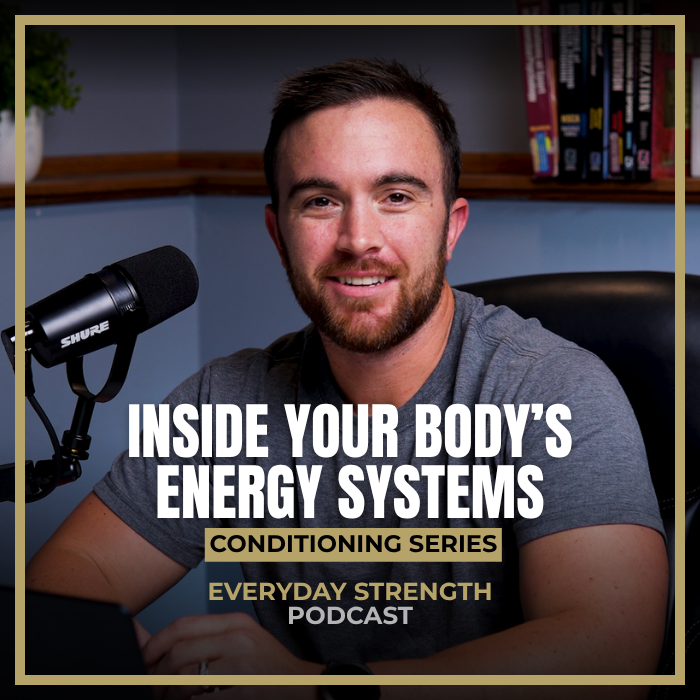
If there is one place to begin, it is with a clear understanding of what conditioning is and how it fits within a complete training system. The episode below walks through definitions, physiology, and the hierarchy of development that guides intelligent programming decisions.
Energy System Development
Every training demand draws from multiple energy pathways. However, the relative contribution of each system shifts depending on intensity and duration. Understanding this relationship allows coaches to assign work that builds the right adaptation at the right time.rnrnShort maximal efforts rely heavily on the phosphagen system. Repeated high intensity bouts introduce greater glycolytic involvement. Longer outputs depend on oxidative support. Importantly, the oxidative system also governs recovery between intense efforts, meaning it quietly influences nearly every session in a program.rnrnAthletes who grasp this framework begin to see conditioning as construction rather than chaos. Sessions become deliberate. Progressions make sense. Fatigue becomes manageable instead of mysterious.rnrnDive deeper into how these systems operate and how they are trained across the calendar.
Explore:
- Subtopic: Energy System Development →
- Article: Phosphagen Energy System Training: Unlocking Power and Speed →
Conditioning Methods
Certain tools allow athletes to accumulate meaningful conditioning volume with lower orthopedic cost. Sled pushes and drags limit eccentric damage while challenging local muscular endurance and cardiovascular output. Loaded carries integrate trunk stability, grip, posture, and breathing under load. Ergs provide precise control over pace and repeatability.rnrnThese methods are powerful because they are scalable. Intensity, duration, and rest can be manipulated to target specific adaptations without compromising upcoming strength work.rnrnUsed correctly, they build ruggedness. Used poorly, they become random finishers.rnrnLearn how these tools fit into a broader system of progression.

Explore:
Aerobic Conditioning
Zone 2 work sits at the heart of long term development because it improves the machinery responsible for recovery and sustainability. Training in this range enhances mitochondrial density, capillary growth, and cardiac efficiency. These adaptations allow the athlete to perform more total work while accumulating less fatigue.rnrnAlthough it often appears simple, proper Zone 2 training requires discipline. Intensity must remain controlled, breathing should be sustainable, and duration must be sufficient to create meaningful stimulus. When executed correctly, this style of training becomes a force multiplier. Strength sessions improve. High intensity efforts become more repeatable. Recovery between days accelerates.rnrnMost athletes underdose it or rush past it. The result is predictable: early gains followed by stalled progress.rnrnExplore this topic further through detailed breakdowns, implementation strategies, and common errors.
Explore:
VO2max & Aerobic Capacity
Explore:
- Subtopic: VO2max & Aerobic Capacity →
- Article: Why Threshold Training Beats Chasing VO₂max →